

- Teacher: gilbert langat
Moodle is an open-source Learning Management System (LMS) that provides educators with the tools and features to create and manage online courses. It allows educators to organize course materials, create quizzes and assignments, host discussion forums, and track student progress. Moodle is highly flexible and can be customized to meet the specific needs of different institutions and learning environments.
Moodle supports both synchronous and asynchronous learning environments, enabling educators to host live webinars, video conferences, and chat sessions, as well as providing a variety of tools that support self-paced learning, including videos, interactive quizzes, and discussion forums. The platform also integrates with other tools and systems, such as Google Apps and plagiarism detection software, to provide a seamless learning experience.
Moodle is widely used in educational institutions, including universities, K-12 schools, and corporate training programs. It is well-suited to online and blended learning environments and distance education programs. Additionally, Moodle's accessibility features make it a popular choice for learners with disabilities, ensuring that courses are inclusive and accessible to all learners.
The Moodle community is an active group of users, developers, and educators who contribute to the platform's development and improvement. The community provides support, resources, and documentation for users, as well as a forum for sharing ideas and best practices. Moodle releases regular updates and improvements, ensuring that the platform remains up-to-date with the latest technologies and best practices.
Links of interest:
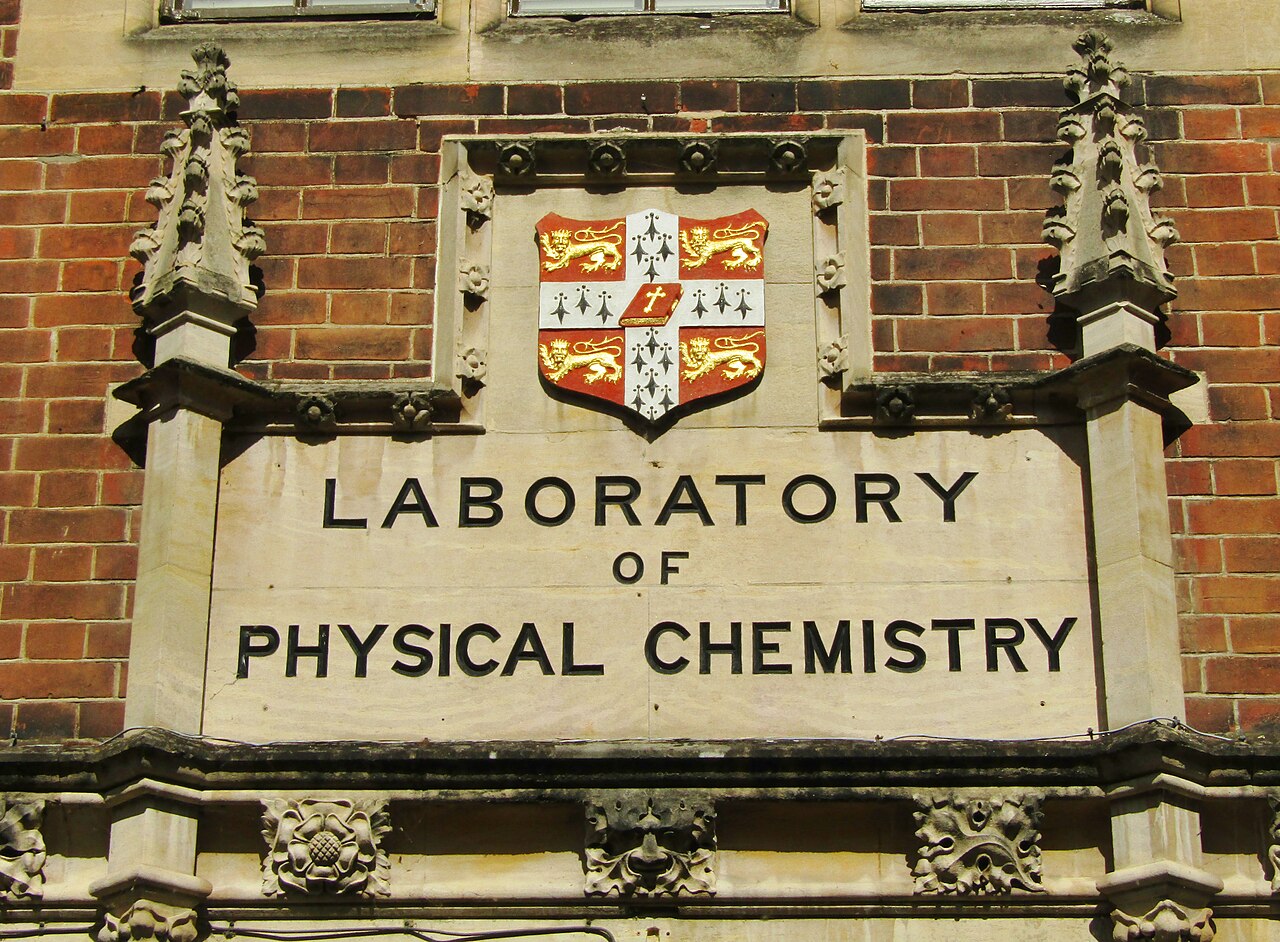
Physical Chemistry — Brief Summary
Physical chemistry is the branch of chemistry that explains how and why chemical systems behave the way they do, using principles of physics and mathematics. It focuses on energy changes, molecular motion, reaction rates, equilibrium, and the structure of matter. Core topics include thermodynamics, kinetics, quantum chemistry, spectroscopy, and electrochemistry. Physical chemistry provides the theoretical foundation that connects chemical observations to fundamental laws of nature.
By the end of the course the trainees should be able to:
1. Explain energy changes in chemical and physical processes using thermodynamic principles.
2. Predict reaction rates and mechanisms using chemical kinetics.
3. Describe equilibrium systems and how variables such as temperature and pressure affect them.
4. Apply quantum concepts to explain atomic and molecular structure.
Core Topics in Physical Chemistry
1.Thermodynamics
Study of energy, heat, work, entropy, and spontaneity of chemical processes.
2.Chemical Kinetics
Examination of reaction rates, rate laws, reaction mechanisms, and catalysts.
3.Chemical Equilibrium
Analysis of reversible reactions and the effects of concentration, temperature, and pressure.
4.Quantum Chemistry
Application of quantum mechanics to atomic and molecular
Sample Interactive Learning Activities
1. Energy and Thermodynamics Simulation
Trainees use an interactive simulation to manipulate temperature, pressure, or volume and observe changes in system energy and entropy.
Skills developed: Conceptual understanding, data interpretation
2. Reaction Rate Lab (Real or Virtual)
Trainees measure how concentration or temperature affects reaction rate and graph their results to determine rate laws.
Skills developed: Experimental design, graphing, critical thinking
3. Molecular Motion Role-Play
Trainees physically model gas molecules by moving around a space to demonstrate collisions, speed distribution, and temperature effects.
Skills developed: Visualization, collaborative learning
4. Spectroscopy Puzzle
Groups match unknown compounds to IR or UV-Vis spectra, justifying their choices based on peak positions and intensities.